
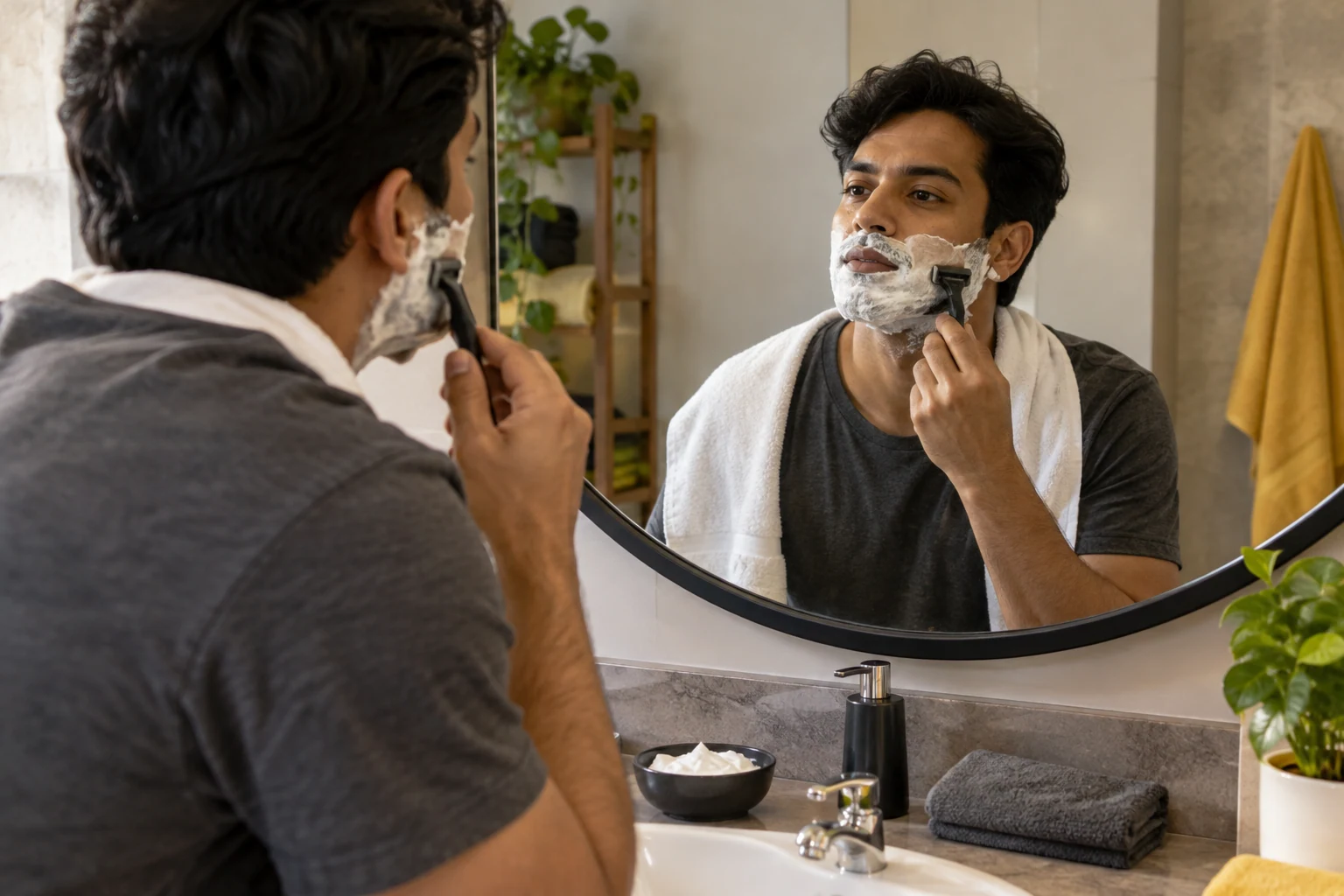
Summary
Razor bumps can develop when cut hairs grow back into the skin. Gentler shaving habits may reduce irritation, but not every bump after shaving has the same cause. Soften the hair, shave in its growth direction, avoid unnecessary pressure and repeated close passes, and get help when symptoms persist or suggest infection.
This guide separates preparation, technique, equipment care and the decision to seek advice. It includes five practical tables, a private observation worksheet and a reminder counter for an equipment limit you choose from the relevant instructions. The counter does not judge whether a blade is clean, sharp or safe, and it does not diagnose a skin condition.
What you’ll understand
- Keep the cause open. Ingrown hairs, irritation and other skin problems can look alike.
- Prepare gently. Appropriate moisture and a suitable shaving product can make the process easier.
- Follow hair direction. Avoid pulling the skin or repeatedly chasing a closer finish.
- Care for the equipment. Follow the actual device instructions and keep personal razors separate.
- Do not pick. Digging at a hair or bump can worsen the problem.
- Use care when needed. Persistent bumps, worsening pain or signs of infection need assessment.
Start with these steps
- Look at the direction your hair grows.
- Prepare with suitable moisture and product.
- Use a gentle pass and follow equipment instructions.
- Record a concern and seek appropriate advice when needed.
General education, not diagnosis or a promise of bump-free skin. Do not start medicines, scrape a lesion or postpone care because a routine or counter appears complete.
What are razor bumps, and what else can look similar?
Razor bumps are often associated with hairs that curve back into the skin after being cut. The resulting reaction can cause visible bumps and discomfort. The term is sometimes used loosely for any problem after shaving, which can make an online explanation sound more certain than it is.
The AAD explanation of razor bumps describes pseudofolliculitis barbae and the role of ingrown hairs. That explanation can help you understand the mechanism. It does not mean that a picture of your skin, or the fact that you shaved yesterday, proves this diagnosis.
Razor burn is another everyday term for irritation associated with shaving. Folliculitis, acne and contact reactions can also produce changes that people call “shaving bumps.” Location, timing, symptoms and examination may matter. Keep your description factual instead of choosing a diagnosis from one similarity.
People differ in hair shape, growth direction, skin sensitivity and shaving needs. A routine that suits a friend may not suit you. Facial hair and body hair also need context rather than an assumption that one technique or product applies to every area.
Our beginner skin-care guide covers general care habits. This article focuses on shaving decisions and their limits. Neither guide replaces assessment of a persistent, painful or changing skin problem.
| Description | What may be involved | What it does not prove |
|---|---|---|
| Razor bumps | A reaction around hairs that grow into the skin | That every visible bump is pseudofolliculitis |
| Razor burn | Irritation linked with shaving | That infection is absent |
| Folliculitis | Inflammation around hair follicles with different possible causes | That an antibiotic is automatically needed |
| Contact reaction | A reaction related to a product or exposure | The exact ingredient responsible |
| Acne-like change | A bump that resembles acne | That a generic acne product is appropriate |
| Persistent or worsening change | A reason for professional assessment | A diagnosis from a checklist or photograph |
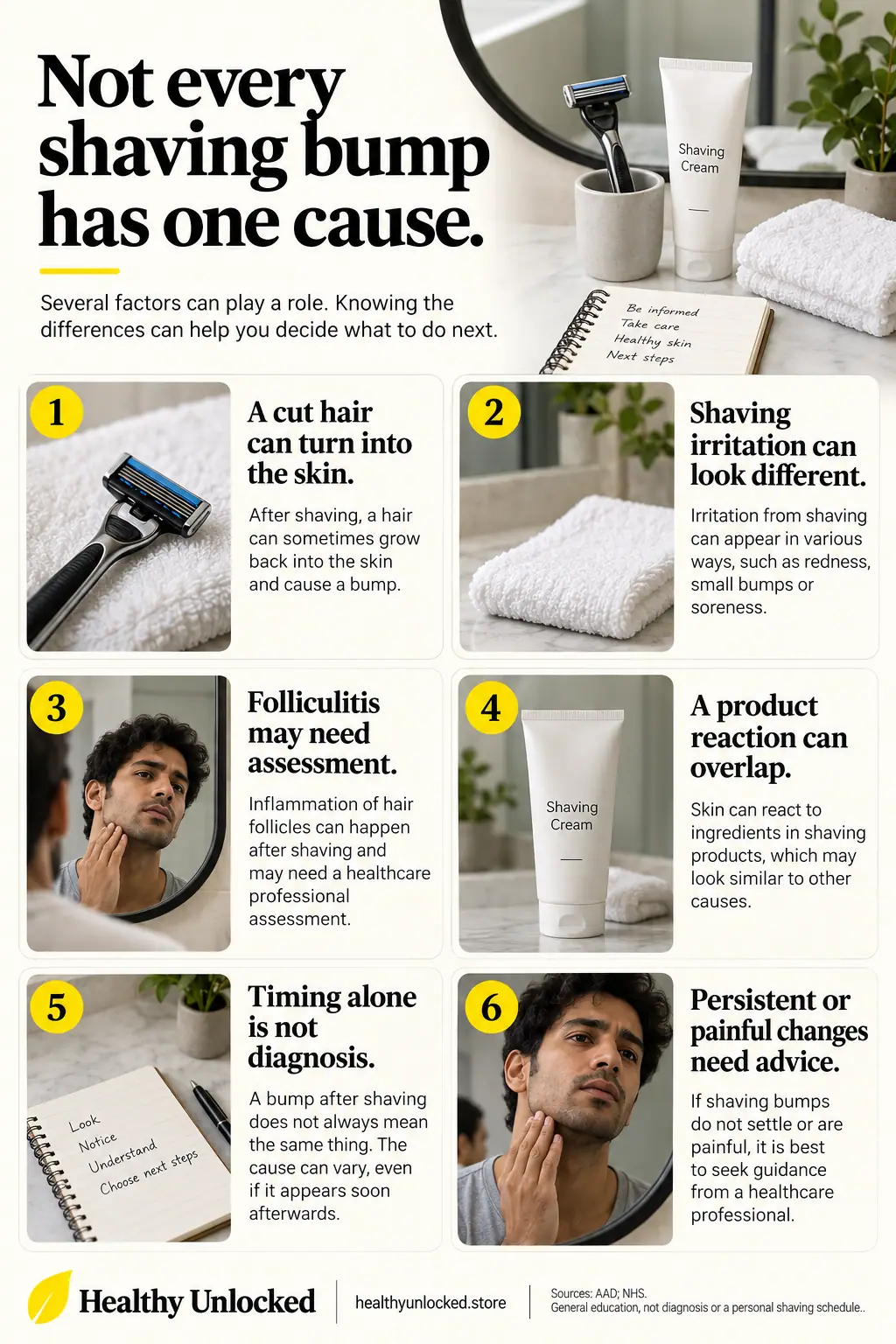
Describe what happened before naming it
A useful note might say that bumps appeared in the neck area after a close shave, with itching but no known fever. That is more useful than claiming a confirmed condition. Record when it started and what changed, then bring the description to a clinician if needed.
The comparison table is a guide to uncertainty, not a diagnostic decision tree. Two problems can overlap and a product reaction can occur alongside a shaving-related problem. An online article cannot inspect the skin, ask every relevant question or decide which treatment fits.
Prepare the skin and hair before shaving
Begin by checking the skin rather than rushing directly to the razor. An open cut, a painful lesion or a significant new reaction may change what is appropriate. Do not shave over a problem simply to finish a routine from a checklist.
The AAD general shaving guide recommends softening the skin and hair before shaving and using an appropriate shaving cream or gel. These are preparation principles, not a reason to force a hot compress, a particular waiting time or a product onto irritated skin.
Use water at a comfortable temperature and handle the area gently. More heat, rough rubbing or an extra-long preparation step does not automatically mean better results. Follow the product and device instructions, and use individual advice when your skin condition requires it.
Check the direction the hair grows. Different parts of the face or neck can grow in different directions. A simple look in good light can make the next pass more deliberate. Looking at direction before shaving is different from pulling the skin taut while moving the blade.
Keep the preparation practical enough to repeat. A clean personal tool, a suitable product and enough time for a gentle process are more useful than a complicated collection of steps you cannot maintain. A product being expensive or strongly scented is not proof that it is better for your skin.
| Check | Practical approach | Avoid this shortcut |
|---|---|---|
| Current skin condition | Notice an open cut or painful change | Shaving over it to complete the routine |
| Hair direction | Look at each area in good light | Assuming all hair grows the same way |
| Skin and hair preparation | Suitable moisture and comfortable water | Extra heat or rough rubbing |
| Shaving product | Use a suitable product according to its instructions | Treating a front-label claim as a guarantee |
| Personal equipment | Check condition and care instructions | Borrowing a used razor |
| Time available | Choose a manageable gentle process | Rushing into repeated close passes |
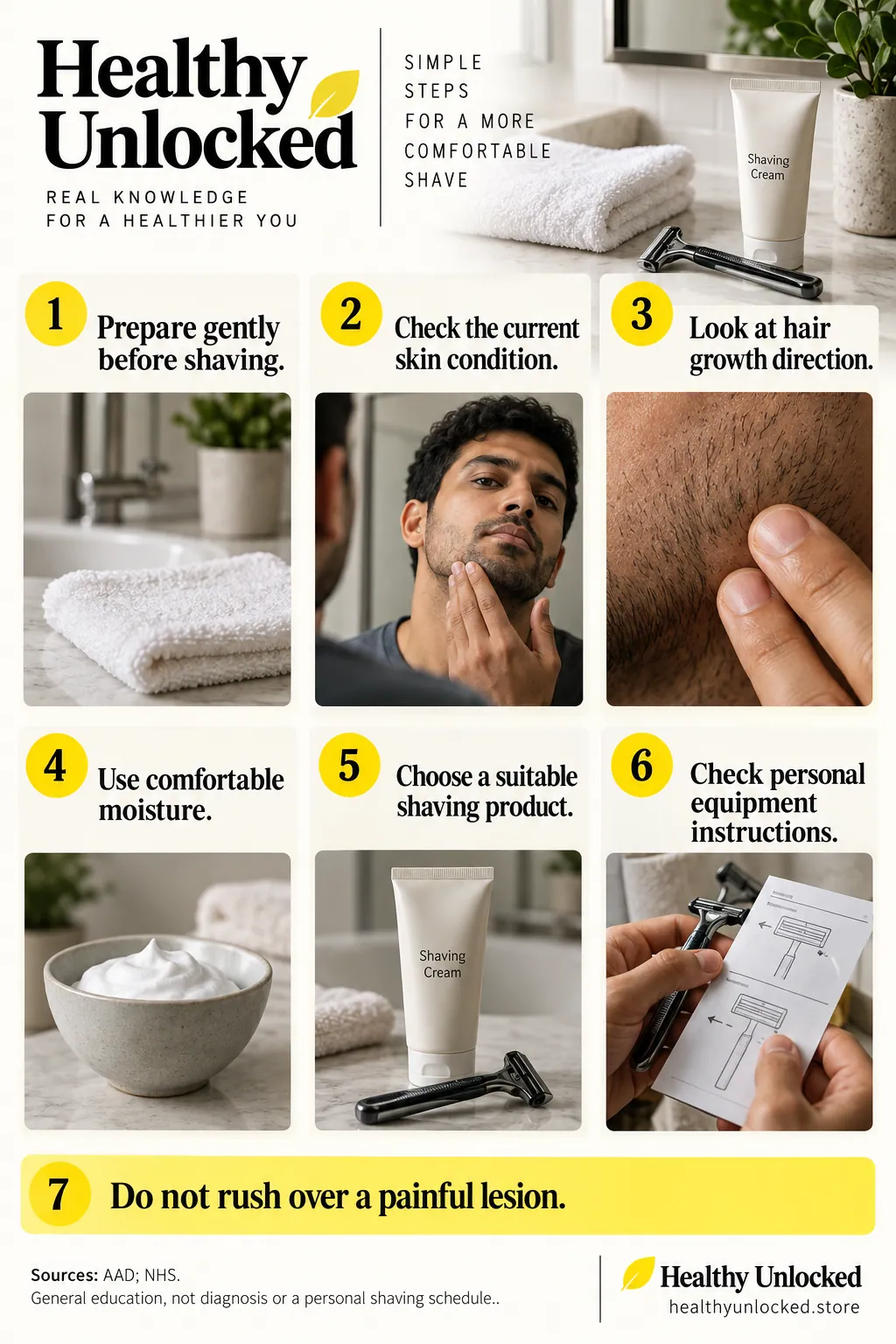
Make a short preparation note if something changed
If you recently changed a shaving product, device or technique, write down what changed. You do not need a long record every day. The information can help a clinician understand the sequence if irritation follows, without proving that one change caused it.
Keep product names or the packaging available for a consultation when relevant. Do not post a personal skin photograph or full medical history in public comments. A private note can be useful without turning the website into a medical record service.
Use a gentler technique instead of chasing closeness
Gentler technique focuses on avoiding unnecessary irritation rather than achieving the closest possible finish. Shave in the direction of hair growth, use controlled strokes and avoid excessive pressure. A very close result is not the only sign of a successful routine.
Do not stretch the skin taut while shaving to make a blade cut closer. The AAD razor-bump prevention guidance emphasizes changing habits, including hair direction and preparation. Its advice should be read with the condition and individual context, rather than turned into a universal schedule for every reader.
Repeated passes can add irritation, especially when you keep working on a small area in search of an invisible hair. Stop and reassess the process rather than assuming more passes are always better. Rinse and handle the equipment as instructed so the next movement is deliberate.
If you can reduce or pause close shaving, discuss whether that fits your circumstances. Work rules, preference and the affected area may matter. Someone who cannot stop shaving may need professional advice on a suitable approach instead of being told that there is only one acceptable grooming choice.
Avoid turning a general recommendation about shaving frequency into personal treatment. Some condition-specific dermatology guidance discusses particular approaches, but the best plan can depend on what is causing the bumps. This article does not prescribe a fixed daily frequency for everyone.
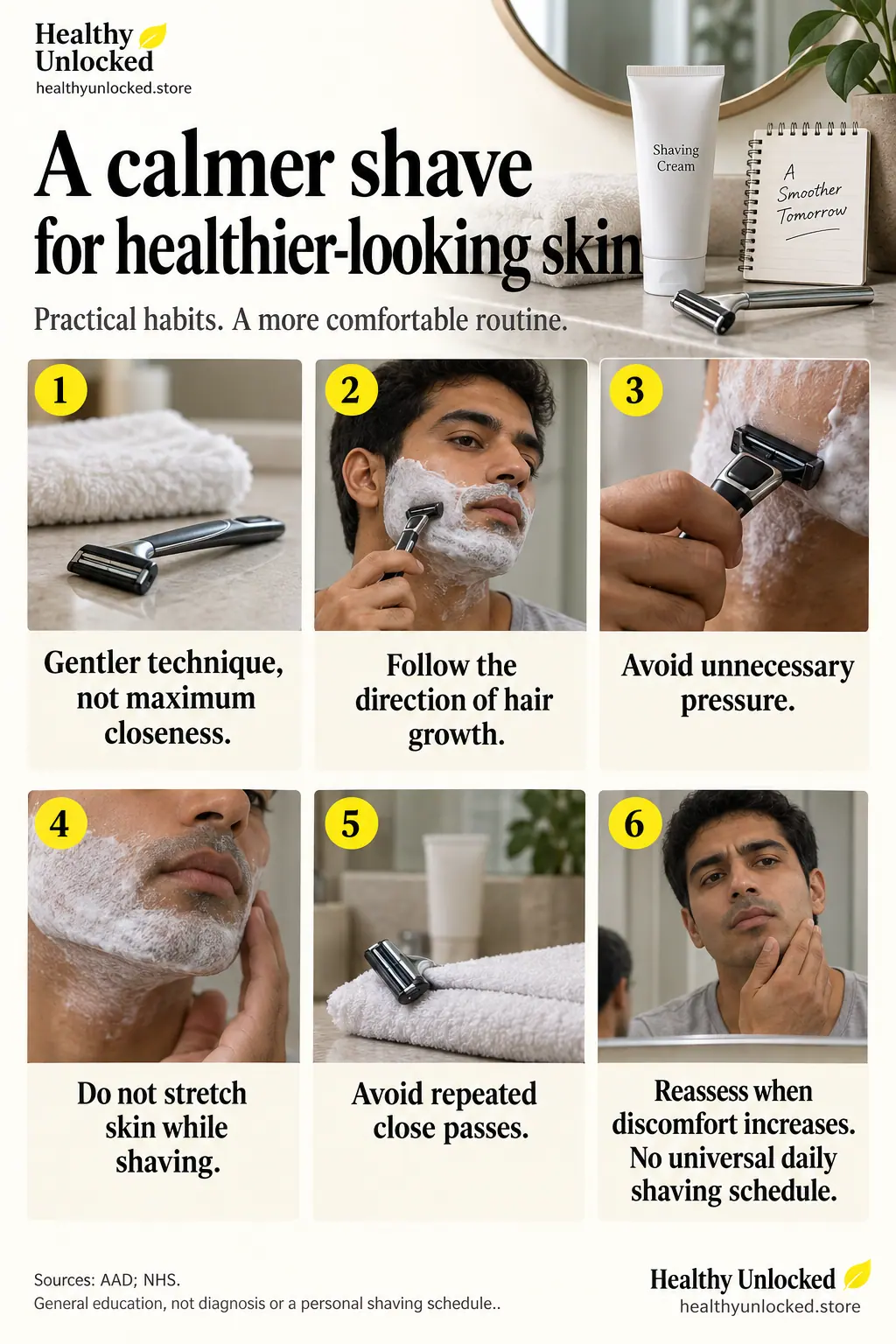
A change should have a clear purpose
You might choose to stop pressing hard or to follow hair direction more carefully. Make the change understandable and observe what happens. Changing the device, product, pressure and schedule at the same time can make the sequence harder to explain, although it still does not turn your record into a controlled experiment.
Do not treat discomfort as a sign that the technique is working. Stinging, worsening pain or a new reaction should prompt reassessment. An article cannot decide how much irritation is acceptable for your skin or provide permission to continue despite a concerning symptom.
Keep equipment care separate from skin treatment
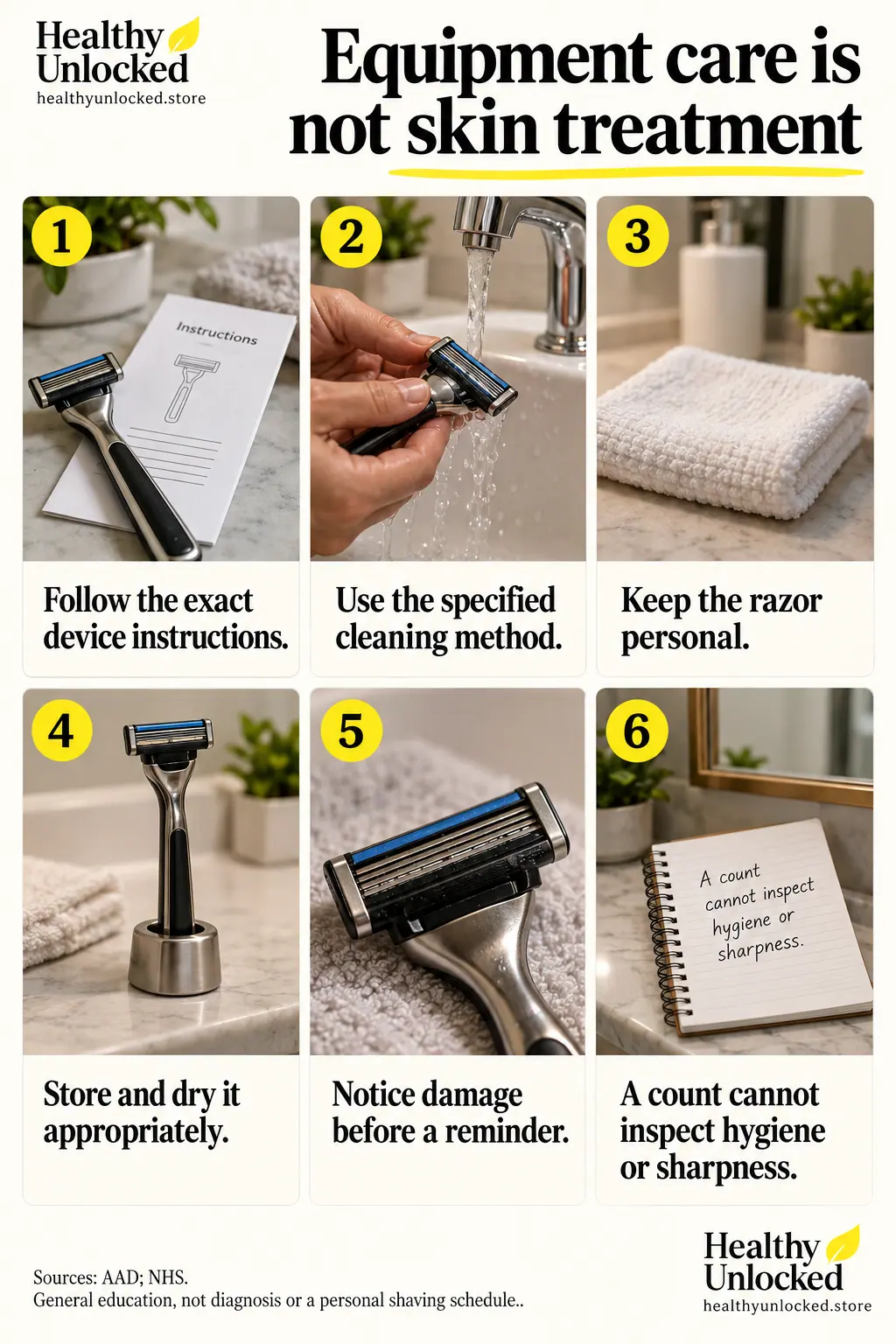
Equipment care and skin treatment are separate subjects. Cleaning or replacing a tool can be part of a sensible routine, but it does not diagnose an existing lesion or guarantee that bumps will clear. Keep the device instructions available and follow the relevant cleaning, drying and replacement guidance.
A dull or damaged blade is a reason to reassess equipment, not to increase pressure to compensate. An electric device also has its own care requirements. Do not assume the instructions for a disposable blade apply to the foils, guards or cleaning system of another device.
Keep a razor personal. Sharing used shaving equipment can create avoidable problems, and a quick rinse is not proof that a shared tool has become suitable for use. If a barber or other service is involved, ask about appropriate equipment practices rather than treating the visit as a substitute for skin assessment.
Store equipment as directed so it can dry appropriately. Leaving a personal razor in a continuously wet place is different from following the manufacturer’s storage advice. Do not improvise a chemical-cleaning mixture or use a cleaning product on your skin because it is used for the device.
If a device has a specific replacement or maintenance instruction, record that instruction accurately. A reminder can help you remember a chosen check, but the condition of the tool matters before the count is reached. A counter cannot see rust, damage, contamination or a change in how the device works.
| Equipment question | Useful action | Limit |
|---|---|---|
| Which device is this? | Keep the exact model or product instructions | Different tools can have different care rules |
| How should it be cleaned? | Use the specified method | Do not improvise chemicals or transfer them to skin |
| Where should it be stored? | Follow drying and storage instructions | A count does not check storage conditions |
| Is there visible damage? | Reassess or replace as appropriate | Do not wait for a reminder to notice a problem |
| What reminder should I record? | Use an applicable instruction or a clearly chosen check | The example number is not a universal replacement rule |
| Can somebody else use it? | Keep personal razors personal | Rinsing is not a safety certificate for sharing |
Read the actual instruction, not an invented bottle label
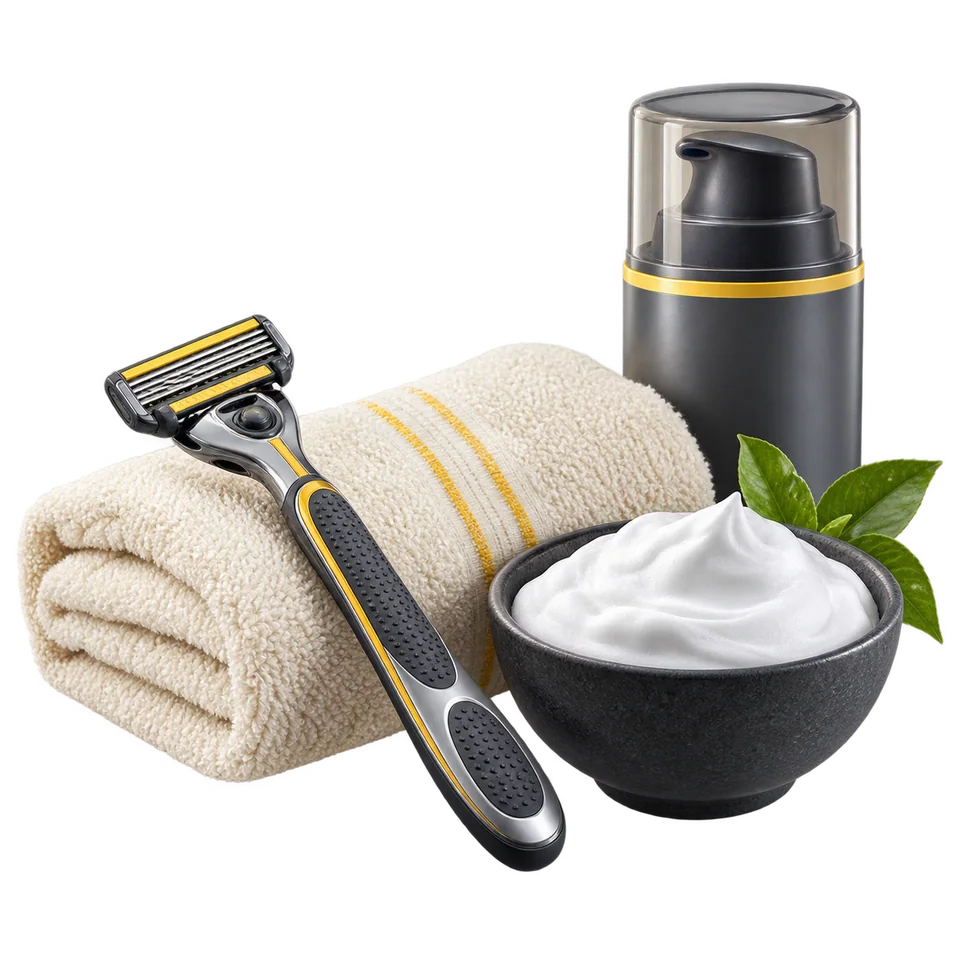
Product photographs in this article illustrate the subject and do not contain a treatment schedule for your skin. Use the real instructions on the item you own. If an instruction is unclear, ask the manufacturer, pharmacist or appropriate professional instead of guessing from a similar-looking picture.
The reminder tool below requires a limit you choose. That choice can come from an applicable equipment instruction or a personal reminder to inspect the tool. It is not a promise that every use before the limit is safe, or that every device should have the same limit.
Choose products with clear instructions and limits
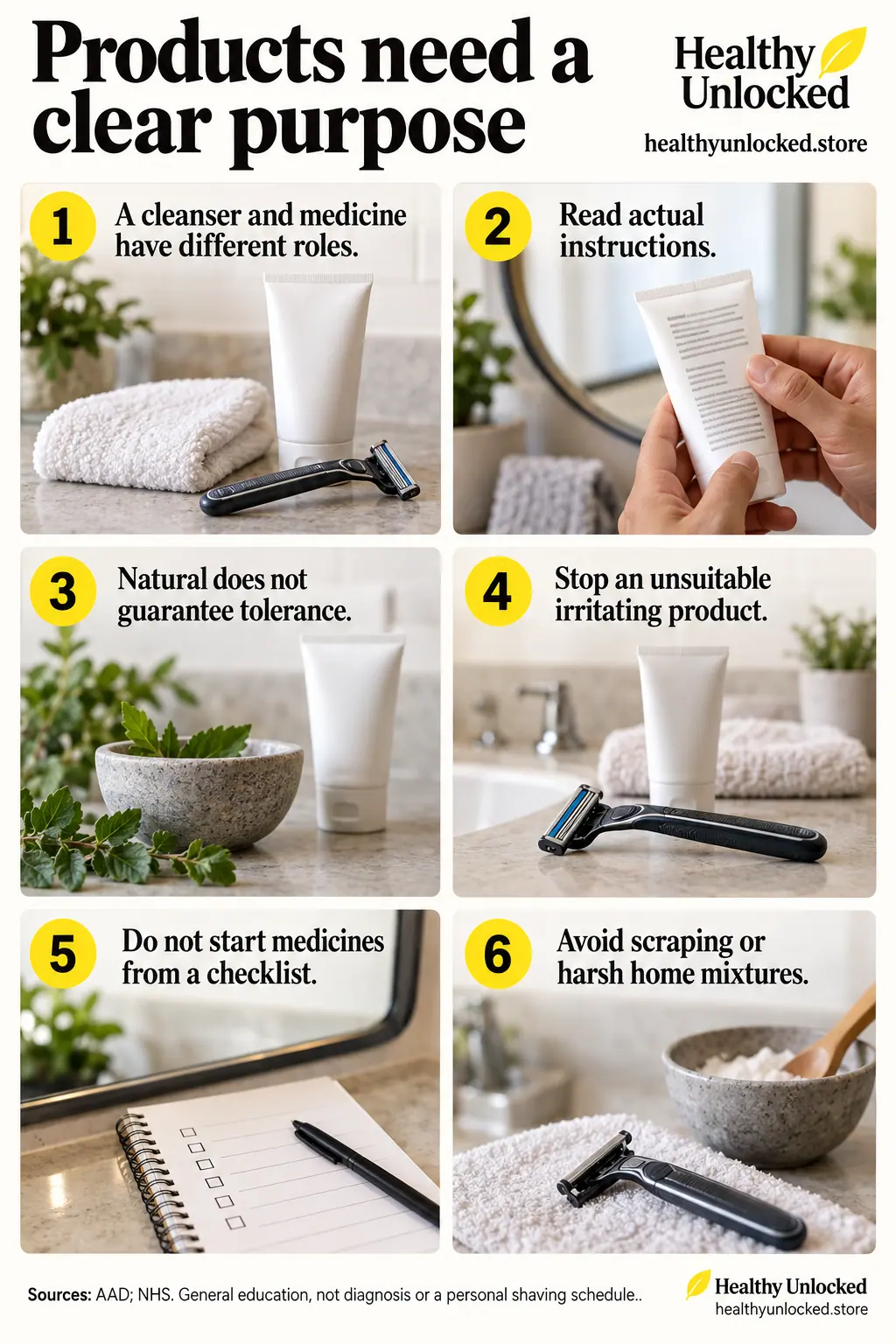
Choose products that are suitable for the skin and the intended use, then follow their instructions. A shaving cream, cleanser, aftercare product and medicine have different roles. Do not combine them into an aggressive routine because they share words such as “clear,” “smooth” or “anti-bump.”
If a product causes burning, stinging or a new reaction, stop using the unsuitable product and seek advice as appropriate. A “sensitive” or “natural” label does not guarantee that every person will tolerate the ingredients. Keep the package information if the reaction needs assessment.
The AAD product-testing explanation gives background on introducing skin-care products. Do not test a product again at home when you have had a serious reaction, and do not treat a small-area test as a guarantee against every later problem.
Avoid starting antibiotics, steroid creams or other medicines from a shaving checklist. Different causes can need different management, and some products can irritate or mask a problem. A pharmacist or clinician can help with the actual product and situation rather than an assumed diagnosis.
Home remedies deserve the same caution as marketed products. Scraping, strong acidic mixtures or rubbing irritating substances onto a damaged area can worsen matters. “Commonly used” is not the same as appropriate for your skin, and the article does not recommend a lemon, abrasive scrub or chemical disinfectant routine.
Keep the routine understandable
Write the name and purpose of each item you actually use. If you cannot explain why a product is present, ask whether it is needed before adding another. A shorter appropriate routine can be easier to evaluate than several overlapping products introduced together.
Our Journal contains related everyday-care reading. Use it for background questions, but do not replace the instructions for a medicine or an individualized plan with a generic article. A link is information, not a prescription.
Observe irritation without picking or self-diagnosing
After shaving, rinse and care for the area gently according to suitable product instructions. Do not scratch, squeeze or dig at a bump to free a hair. A visible trapped hair can tempt you to intervene, but an online guide cannot make that procedure safe for your situation.
The NHS ingrown-hair guidance advises against picking or scratching and explains when a painful or concerning area needs help. Use the symptom advice rather than treating a photograph or a saved note as a diagnosis.
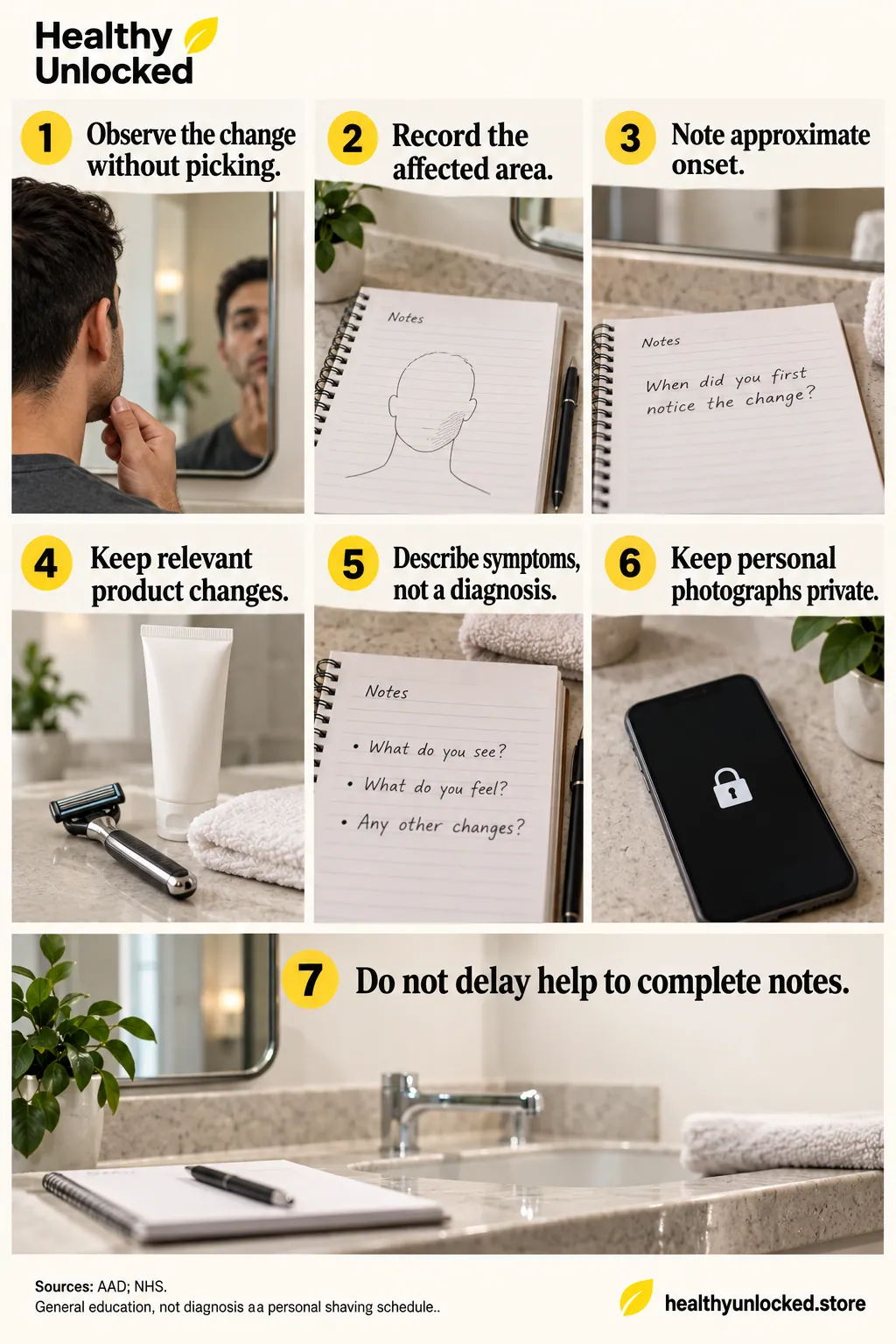
Observe the actual change: location, approximate onset, discomfort and any new product or technique. If you keep a photograph for a clinician, store it privately and use an appropriate sharing route. There is no need to upload it to this website to use the reminder counter.
Dark marks or scarring can be a reason to seek advice, especially when the problem keeps returning. Do not promise a fixed number of days for a mark to disappear, and do not attack it with a stronger scrub. The cause, skin response and appropriate care may differ.
If you have an existing skin treatment plan, ask how shaving should fit around it. Do not stop a prescribed medicine or change its frequency because a general aftercare paragraph seems simpler. Explain what is happening and ask for the adjustment that fits the actual condition.
| Field | Useful entry | Avoid |
|---|---|---|
| Where | The affected area in ordinary words | Assuming a diagnosis from location |
| When | Approximate onset and shaving date | Inventing a precise timeline |
| What changed | Product, device or technique if relevant | Treating sequence as proof of cause |
| Symptoms | Pain, itching or other observed changes | Replacing symptoms with a self-diagnosis |
| Existing advice | Current relevant treatment instructions | Changing treatment independently |
| Main question | What you want a professional to explain | A public upload of private health details |
A record should support care, not delay it
You do not need to finish a week of notes before asking for help. One clear description can be enough to start a conversation. More detail is useful only when it makes the problem easier to understand, not when it becomes a reason to wait despite worsening symptoms.
If tracking makes you repeatedly inspect, pick or worry about the skin, simplify the record. The useful question may be how to get assessment rather than how to add another column. The website does not monitor the notes or provide an emergency service.
When should you get professional help?
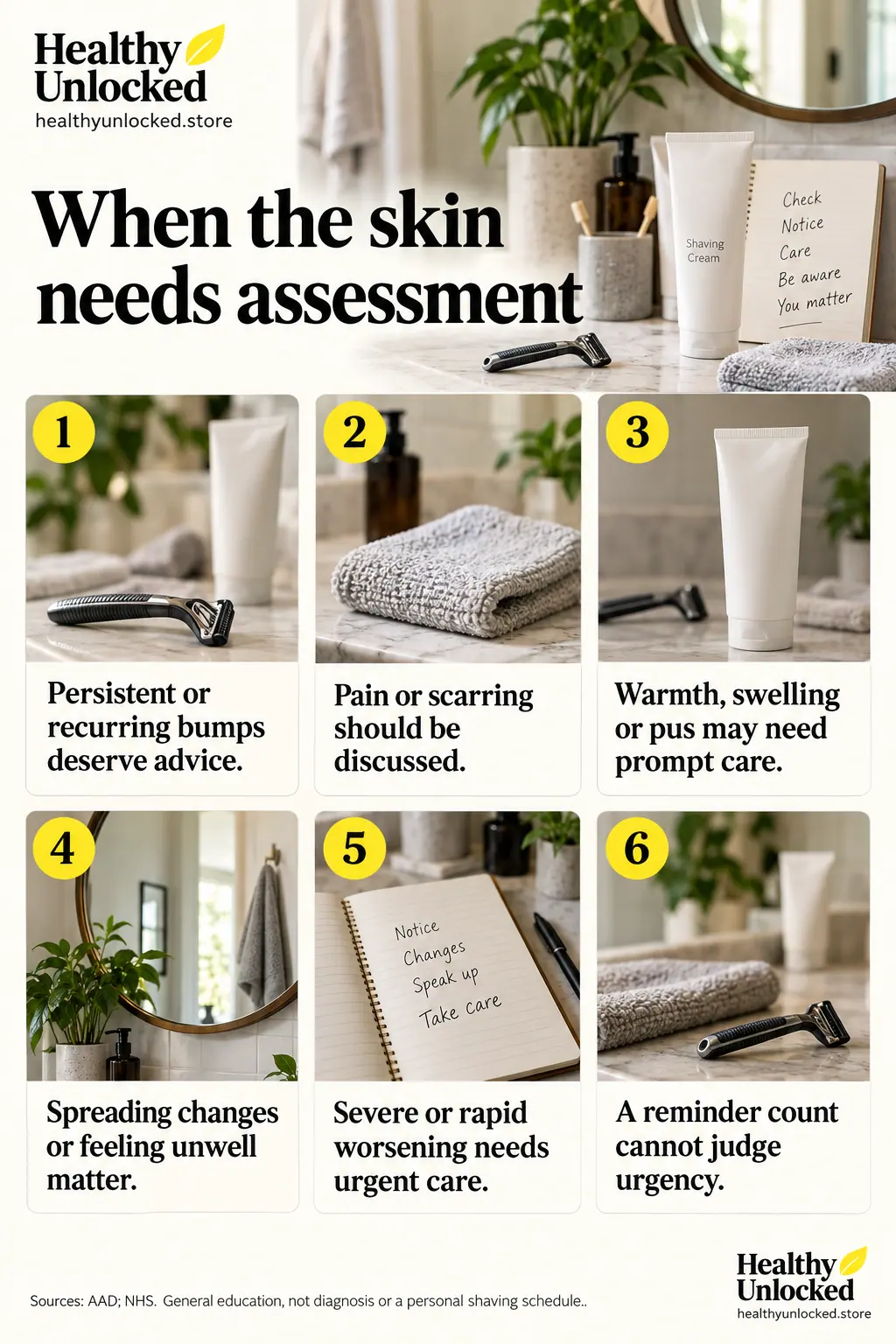
Get professional advice when bumps persist despite gentler habits, keep returning, are painful or are leaving marks or scars. There may be a cause that needs assessment or a treatment that should be tailored to the skin and circumstances.
A hot, swollen or very painful area, pus, spreading changes or feeling unwell can need prompt assessment. The AAD folliculitis overview explains why acne-like bumps can have a different cause. A razor-bump routine cannot rule out infection or choose an antibiotic.
If symptoms are severe or rapidly worsening, use appropriate urgent medical services. Do not wait for a product trial, a scheduled shave or a reminder count to finish. The tool below has no urgency score, and a completed record does not mean that care can safely wait.
Bring the product and equipment details, the main symptom and any relevant existing treatment. Ask what the likely cause is, whether further assessment is needed and how to adjust shaving. You can also ask which changes should prompt earlier contact.
Leave with a clear plan rather than a collection of unexplained product names. Confirm what to use, how to use it and when to review the response. If a term is unfamiliar, ask for a plain-language explanation. A practical next step matters more than forcing a diagnosis from an article.
Work requirements can be part of the conversation
If you must maintain a particular grooming standard, say so during the consultation. Advice that ignores that constraint may be hard to follow. A clinician can discuss the skin issue and possible approaches without assuming that every reader can simply stop shaving.
For a grooming service, explain a current skin concern and ask about suitable practices. A barber is not automatically a medical assessor, and repeated service visits should not replace professional assessment of a persistent problem. Keep these roles distinct.
Try the shaving-equipment reminder counter
The reminder counter compares a whole-number equipment-check limit you enter with the whole-number uses you have recorded. It is a small arithmetic aid, not a way to decide whether a blade is safe or whether your skin is improving.
The formula is: count before the chosen reminder = the larger of zero and the chosen limit minus recorded uses. If uses reach or exceed the limit, the display says the chosen reminder has been reached. It does not automatically recommend a replacement product or give medical advice.
Example one: you enter a hypothetical reminder at five recorded uses and have logged three. Five minus three gives two uses before that chosen reminder. Example two: the chosen reminder is seven and seven uses have been recorded. The counter shows zero and says the reminder has been reached.
These are examples of counting, not universal blade-replacement instructions. A damaged, dull or improperly stored tool can need attention before any selected limit. Read the actual device instructions and respond to its condition rather than using the count as permission to continue.
The tool runs in your browser, with no request for a name, photograph or diagnosis. Save your own result if you want a record. Site services are covered by the privacy policy; this is not a healthcare record system or a service that monitors your shaving equipment.
| Input or condition | Handling | Important limit |
|---|---|---|
| Chosen reminder limit | A positive whole number | Chosen from relevant instructions or a clearly personal check |
| Recorded uses | A whole number of zero or more | An estimate cannot inspect the device |
| Uses below the limit | Subtract uses from the limit | Not a number of guaranteed safe uses |
| Uses at or beyond the limit | Show zero and the reached-reminder message | No automatic treatment or product recommendation |
| Blank, negative or fractional count | Clear the result and ask for correction | Invalid entries must not leave a stale answer |
| Reset or download | Clear entries or save the entered count | The saved result is descriptive arithmetic |
Count toward your equipment-check reminder
Chosen count 5 minus 3 uses leaves 2. Counts 5 and 7 are examples, not a safe-use or blade-replacement rule.
Chosen count 5 minus 3 uses leaves 2. Counts 5 and 7 are examples, not a safe-use or blade-replacement rule.
Calculations use this page’s entries in your browser; they do not save or send them to a Healthy Unlocked server. Keep downloaded files private as needed.
Keep maintenance and symptoms in separate notes
The downloadable worksheet has a place for the equipment instruction, the chosen reminder and the recorded count. A separate observation area records the skin concern and questions for a professional. The count should not be used to infer that a symptom must have a particular cause.
The worksheet is original editorial material, not a validated skin questionnaire or a clinical dataset. Use a clinician-provided form when requested and follow individual advice. An uncomplicated record is useful only when its purpose and limits remain clear.
Common questions about preventing razor bumps
Are all bumps after shaving razor bumps?
No. Ingrown hairs, irritation, folliculitis, acne and contact reactions can overlap or look similar. Timing after a shave is useful information, but it does not confirm a diagnosis.
Should I shave against the grain for a closer finish?
General dermatology guidance favours the direction of hair growth to reduce irritation. Avoid excessive pressure, skin stretching and repeated close passes. Individual skin problems may need tailored advice.
Should everybody shave on the same schedule?
No. Condition-specific advice and individual circumstances can differ. This article does not prescribe a universal daily frequency or tell you to continue shaving over a painful or concerning lesion.
Can I pick out a trapped hair?
Do not dig, squeeze or pick at the bump. That can worsen the area. Seek suitable advice when it is painful, persistent or shows concerning changes.
Does the counter tell me how many safe shaves remain?
No. It counts toward a limit you choose. It cannot inspect sharpness, damage, hygiene or storage, and it does not override the actual equipment instructions.
When should I get help?
Seek advice for persistent, recurring, painful or scarring problems. Worsening pain, warmth, swelling, pus, spreading changes or feeling unwell can need prompt assessment; severe or rapidly worsening symptoms need appropriate urgent care.
Your next shave: check the hair direction and equipment instructions, choose a gentler process, and keep a concern separate from a maintenance count. Ask for help when the skin needs assessment.
About this article
By Yashveer Bharani for Healthy Unlocked. This article draws on public dermatology and health-service sources with original editorial tables and worksheets. It does not claim an independent dermatologist review, clinical examination or tested product comparison.
The equipment counter uses the visible counting formula. Its hypothetical reminder limits are not medical treatment or universal replacement intervals. Images illustrate the subject and do not document a diagnosed patient or a tested outcome.
Sources and further reading
These original references support the guidance and its limits. A link does not mean that the institution reviewed or endorsed this article.
Main guidance
Practical reference
Context and definitions
Safety and care
Evidence and limitations
Further reference
 Healthy Unlocked
Join the conversation
Share a practical idea or ask a question about this guide. Please keep personal medical details private.