
Summary
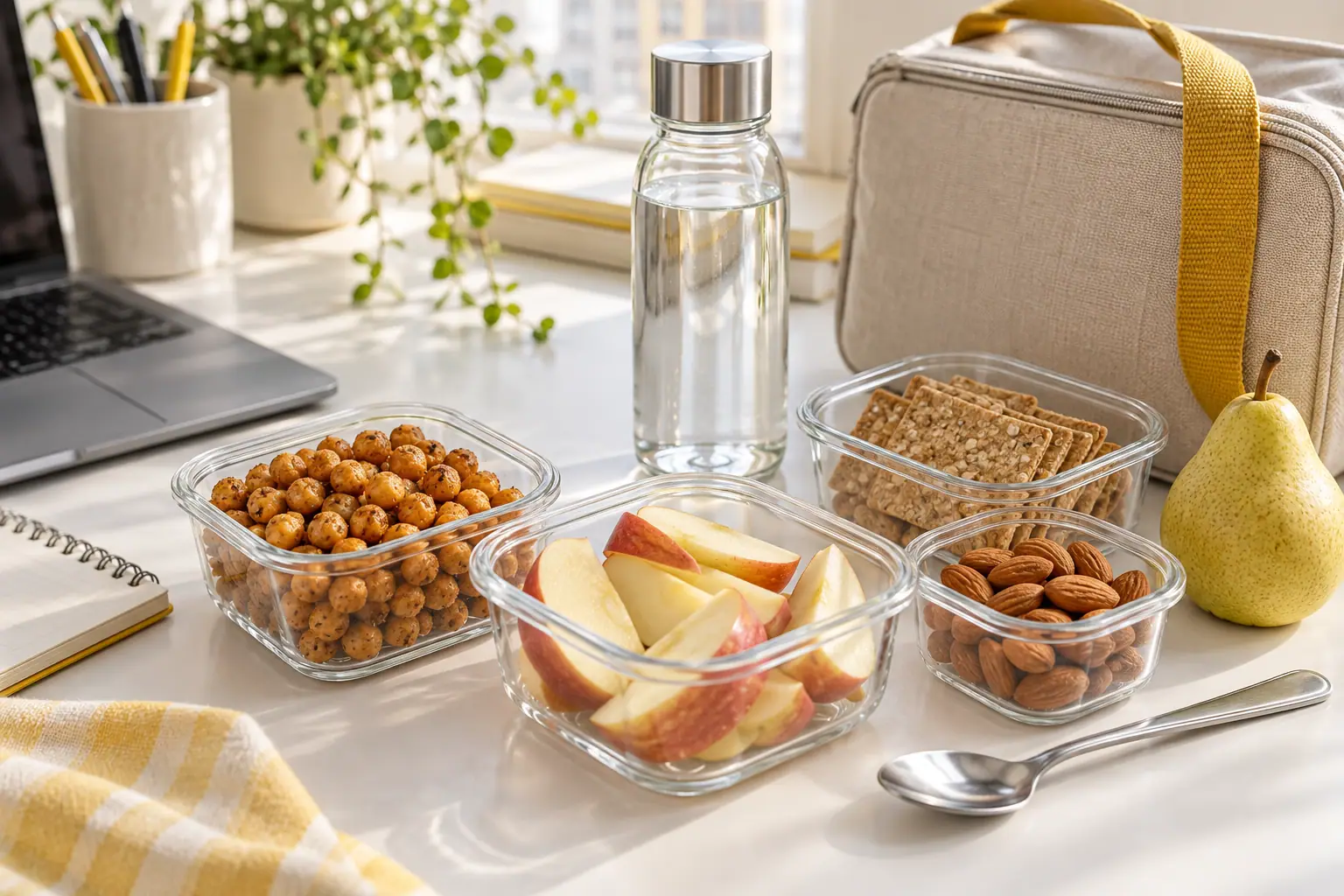
Useful fiber snacks for work can include whole fruit, nuts, whole-grain foods and legumes. Compare a realistic edible portion and its preparation before comparing nutrient grams. Choose food you enjoy, can afford and can store safely. The largest fiber number does not automatically make the most suitable snack or a complete meal.
This guide connects everyday choices with a traceable food chart, label examples, storage checks and a one-ingredient portion calculator. The numbers are USDA estimates for stated foods and weights, not laboratory analysis of your mixed recipe or a personal fiber prescription.
What you’ll understand
- Use the portion. A small nut serving and a bowl of chickpeas are different amounts.
- Read preparation. Cooked chickpeas are not dry roasted chana or a complete chaat.
- Plan cold storage. Yogurt, cooked dishes and cut produce can need refrigeration.
- Respect allergies. Workplace rules and cross-contact can change your choice.
- Build gradually. A sudden large increase in fiber may be uncomfortable.
- Keep food flexible. Snacks support a day of eating; they need not become a diet rule.
Start with these steps
- Choose one familiar fruit, grain or legume option.
- Check the edible portion and the preparation.
- Arrange any refrigeration needed during the journey and at work.
- Pack an amount that fits your appetite and day.
This is general food education. Persistent digestive symptoms or a medically restricted diet need individual advice. Do not force a high-fiber target or ignore food-safety limits to finish a packed snack.
What makes a fiber snack useful at work?
A useful work snack fits both your food needs and the practical setting. It might be eaten at a desk, between meetings, during a shift or on the way home. Fiber matters, but so do appetite, enjoyment, storage, allergies and whether you will have enough food for the rest of the day.
Dietary fiber comes from plant foods. Whole fruit, legumes, whole grains, vegetables, nuts and seeds can contribute it in different amounts. A snack does not need to contain a rare ingredient or a supplement to bring fiber into ordinary eating. Familiar food with a clear portion is often easier to plan than an expensive product chosen for its headline.
The Harvard Nutrition Source explanation of fiber provides background on food sources and the broader dietary pattern. Treat a snack as one part of that pattern. A single food does not establish your daily intake, and its fiber amount alone does not describe every aspect of its nutrition.
If you do not want a snack, this guide is not a rule that everyone must add one. A snack can be useful when your day or appetite calls for it. It can also be adjusted as work schedules change. Avoid turning a list of options into a fixed menu you must follow even when it does not suit you.
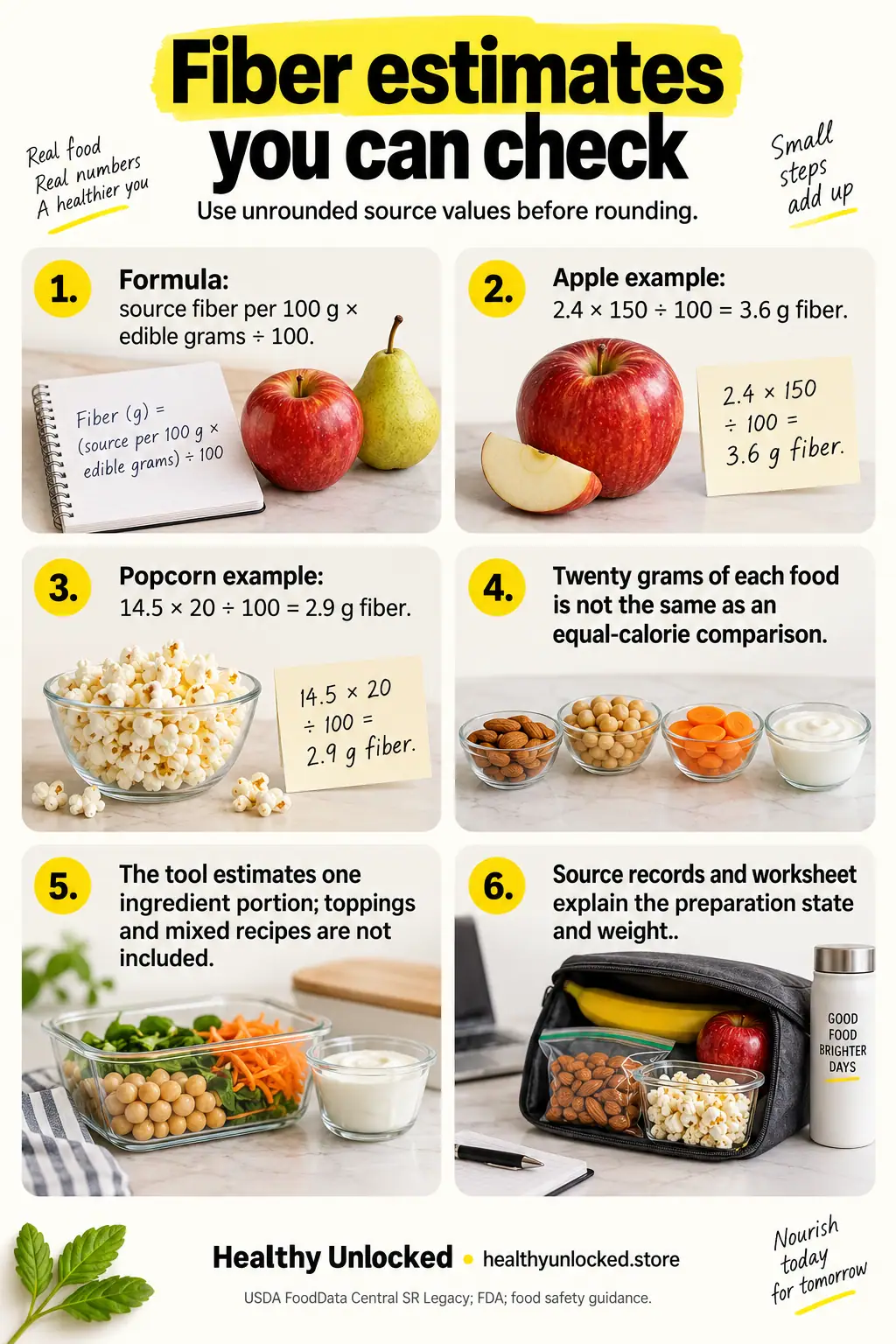
High-fiber search headlines can make every item look interchangeable. They are not. Twenty grams of popcorn and a 150-gram pear differ in weight, volume and other nutrients. The chart below states each portion so you can see what the number describes, rather than choosing the largest figure without context.
| Question | What to check | Why fiber alone is not enough |
|---|---|---|
| Will I enjoy it? | Taste, texture and familiar foods | An uneaten snack contributes nothing to your day |
| Can I store it safely? | Journey, workplace refrigerator and cold packs | A nutrient number does not prevent spoilage |
| Is it appropriate here? | Allergies, shared space and workplace rules | A nut option may not suit the setting |
| Does the portion fit? | Edible weight and appetite | Per-100-gram numbers can mislead |
| What else will I eat? | Meals and the wider day | One snack is not a complete eating plan |
Think about a food’s job in your day
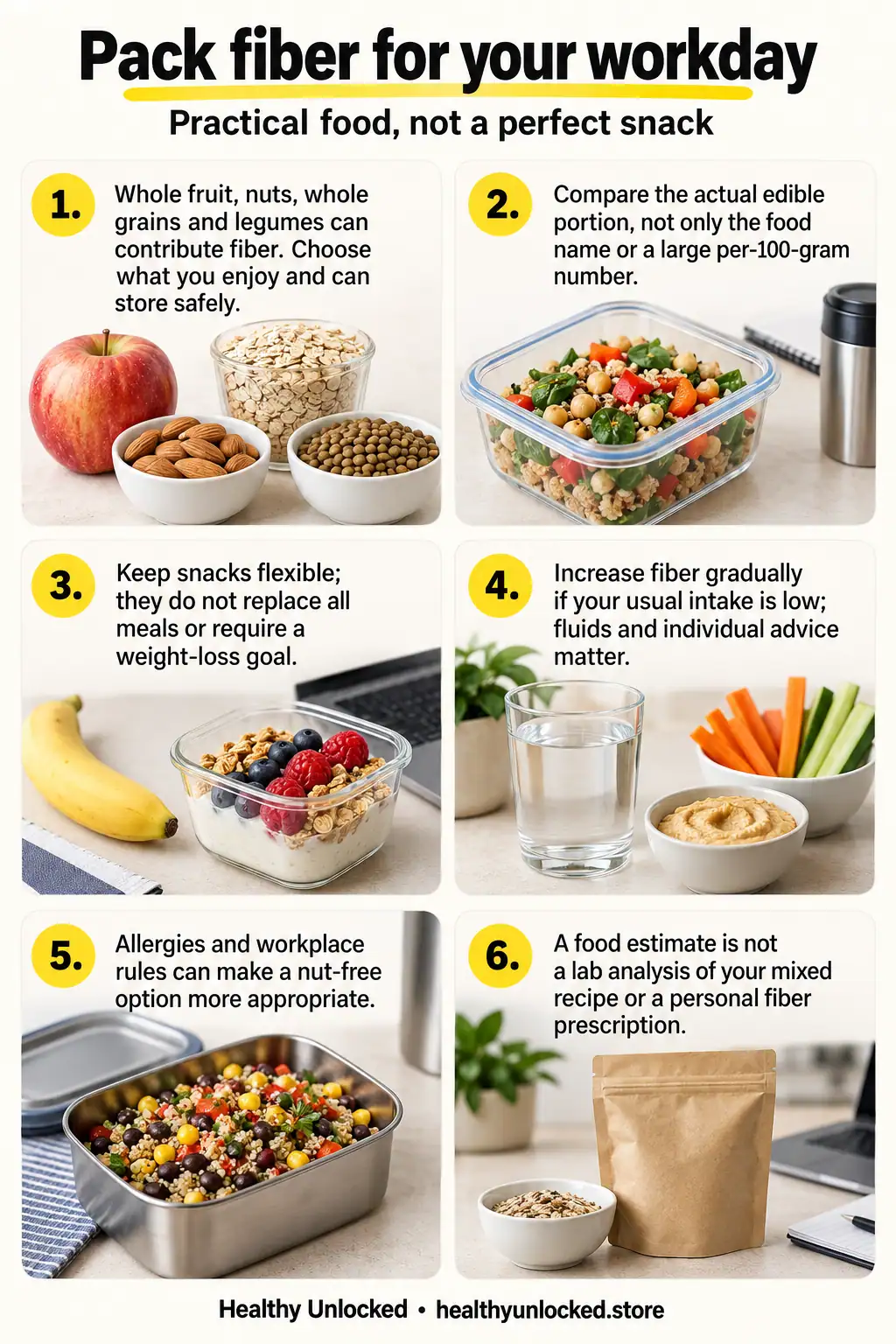
A small crunchy option may fit a short break; another day you may need something more substantial alongside a meal. Neither situation needs a moral label about being good or bad at eating. Ask what the food is doing for you and what practical limits apply, then choose a suitable amount.
Our protein and fiber food guide explains how ingredients can work together across a meal. A plain yogurt can contribute protein without supplying fiber, for example. Adding appropriate plant food changes the combination, but the full meal still depends on all its ingredients and portions.
Compare foods using clear edible portions
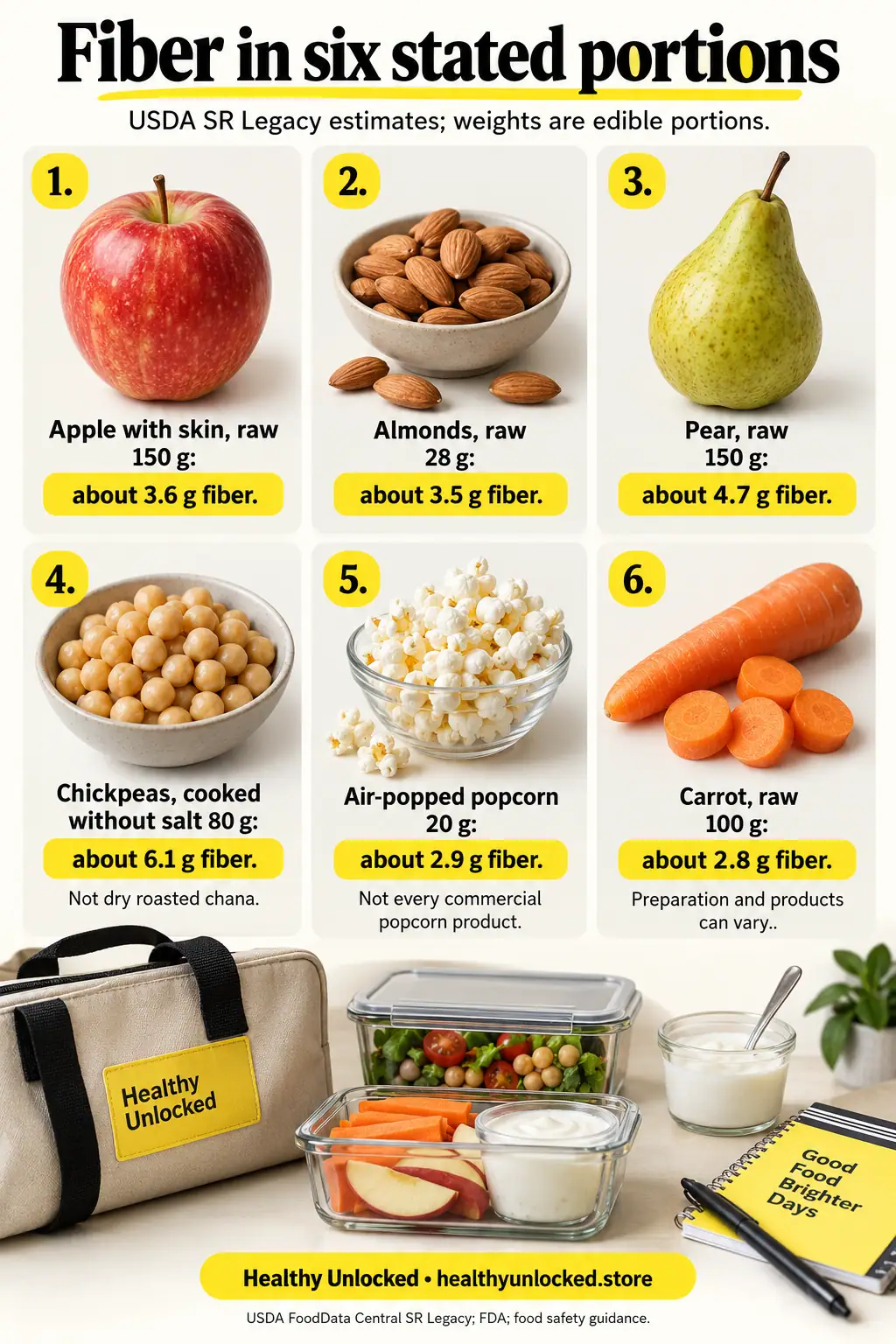
The chart uses USDA FoodData Central SR Legacy records checked on October 7, 2026. Each row names the preparation and edible portion. The weights are illustrative comparison amounts, not recommended portions for every person. The records are historical food-composition estimates, not newly measured samples from this kitchen.
Compare the weight with the food name. Raw nuts, cooked chickpeas and dry oats do not use the same preparation state. Water changes food weight during cooking. The cooked chickpea record should not be substituted for a dry roasted chickpea product, and an oat estimate should not be used as the complete value of prepared oats with milk and toppings.
Fruit weights refer to the edible portion described by the record. Banana peel is not included in its example, and the apple row includes the skin. A real fruit can vary in size. If you need a gram-based comparison, weigh the edible portion rather than assuming that every small, medium or large fruit has the same weight.
The listed raspberries are one optional example, not a reason to buy an expensive fruit. Use familiar available choices and read the actual record when making a numerical substitution. Nutrient values for one fruit should not be relabeled as those of another simply because both fit in the same container.
| Food and readable source record | Edible weight | Fiber per 100 g | Estimated portion fiber |
|---|---|---|---|
| Apple with skin, raw (FDC 171688) | 150 g | 2.40 | 3.6 g |
| Almonds, raw (FDC 170567) | 28 g | 12.50 | 3.5 g |
| Raspberries, raw (FDC 167755) | 80 g | 6.50 | 5.2 g |
| Pear, raw (FDC 169118) | 150 g | 3.10 | 4.7 g |
| Banana, raw (FDC 173944) | 100 g | 2.60 | 2.6 g |
| Chickpeas, cooked without salt (FDC 173757) | 80 g | 7.60 | 6.1 g |
| Popcorn, air-popped (FDC 167959) | 20 g | 14.50 | 2.9 g |
| Oats, regular/quick, dry (FDC 173904) | 40 g | 10.10 | 4.0 g |
| Peanuts, raw (FDC 172430) | 28 g | 8.50 | 2.4 g |
| Carrot, raw (FDC 170393) | 100 g | 2.80 | 2.8 g |
Values are calculated before rounding to one decimal place. The foods are not compared at equal calories or equal weights. Labels and recipes can differ. Follow each food link to the readable nutrient record, not a raw data endpoint.
Build practical snack pairings
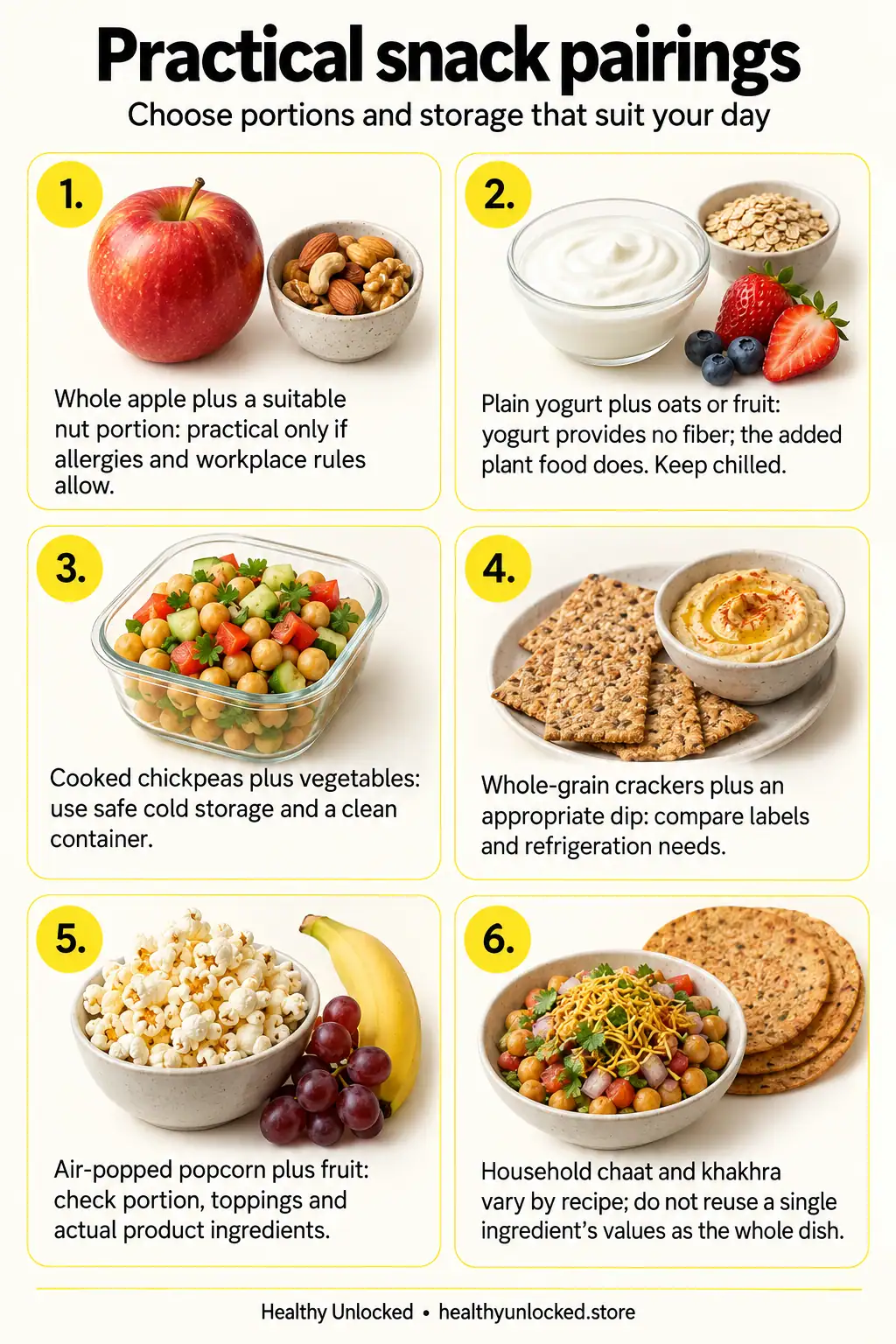
Pairings are suggestions for practical combinations, not fixed prescriptions. Begin with something you already like. Consider whether it needs cold storage and whether the portion fits the time until your next meal. You can keep the combination simple without trying to maximize a number.
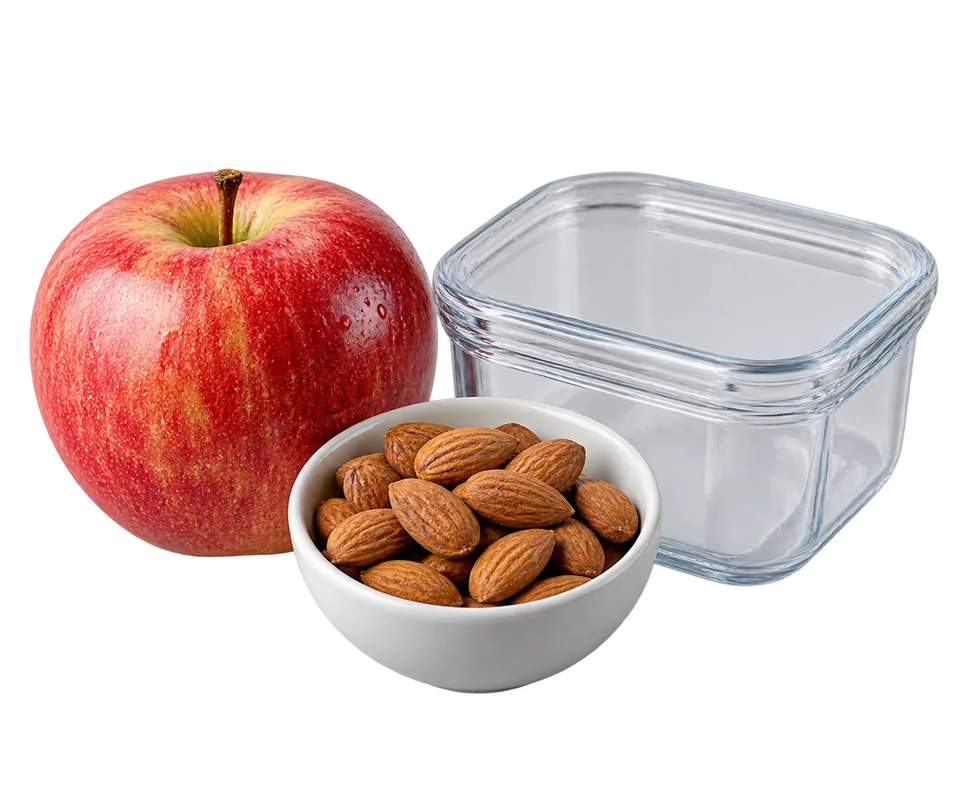
Whole fruit and a suitable nut portion. An apple or pear can travel as a whole fruit, with nuts in a separate clean container when allergies and workplace rules allow. The nut portion is not unlimited because a package uses a healthy label. Choose a manageable amount and keep the actual ingredients visible.
Plain yogurt with fruit or oats. Yogurt itself does not provide fiber; the plant ingredient contributes it. Keep the yogurt safely chilled during the journey and at work. The dry oat row describes oats alone, not the full prepared bowl. Its toppings and other ingredients need their own consideration.
Cooked chickpeas and vegetables. This can be a convenient prepared option when you have safe cold storage. A household chickpea salad or chaat may include several ingredients, sauces and different portions. Do not claim that the cooked chickpea figure measures the entire dish.
Whole-grain crackers and a suitable accompaniment. Check the actual product’s fiber amount and serving size. The words whole-grain or multigrain do not make every portion nutritionally identical. A dip or cheese may also have storage and allergy considerations that the cracker package does not describe.
Air-popped popcorn and fruit. The chart’s popcorn estimate describes air-popped popcorn, not every flavored or oil-popped product. Read the actual ingredients and portion. A bag’s front image can make the amount look different from the labeled serving, so use the label rather than visual guesswork.
| Combination | Fiber comes mainly from | Storage and suitability check |
|---|---|---|
| Fruit and nuts | Fruit and nuts | Check allergies and workplace rules |
| Yogurt with fruit or oats | The plant ingredient | Keep dairy and prepared mixture safely chilled |
| Cooked chickpeas and vegetables | Legumes and vegetables | Arrange cold storage for the prepared dish |
| Whole-grain crackers with accompaniment | The actual grain product and other plant ingredients | Read labels, allergens and refrigeration needs |
| Air-popped popcorn with fruit | Popcorn and fruit | Do not substitute generic values for a flavored product |
Read the portion before the package promise
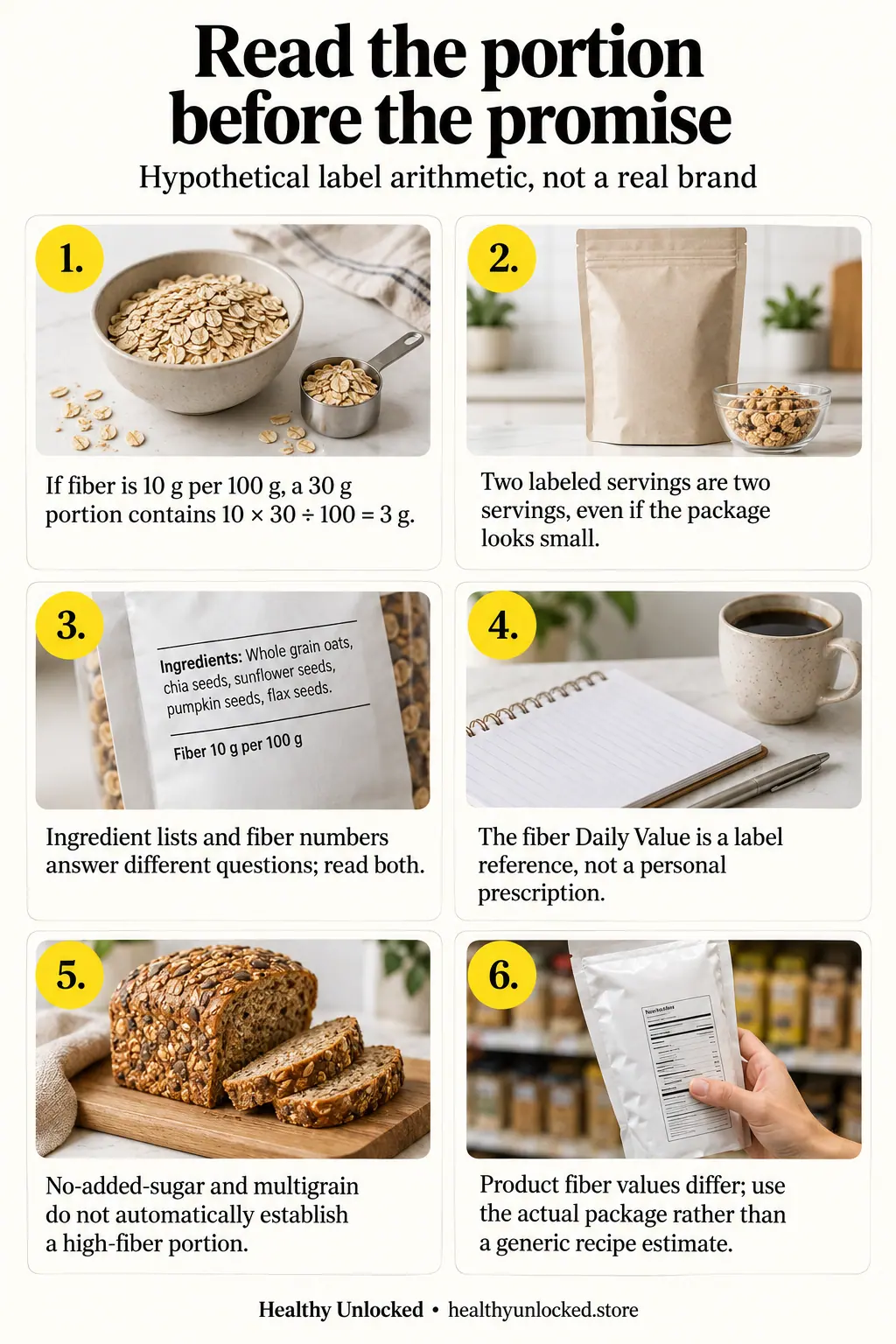
Read the serving size before the front-of-package claim. A listed nutrient amount may describe one serving rather than the whole bag. If you eat two labeled servings, the amount supplied by that product is twice the one-serving figure. A small-looking package can still contain more than one serving.
The FDA guide to using the Nutrition Facts label explains serving information and nutrient amounts. For US labels, fiber Daily Value is a reference used on the package, not a personal prescription. Needs vary with age, health and the wider eating pattern.
Ingredient lists answer a different question from the fiber line. A label can tell you which ingredients are present, while the nutrient panel gives amounts for a stated serving. Read both when useful. Words such as no added sugar, multigrain or natural do not establish the fiber amount in the portion you will eat.
Use actual product information for a packaged snack. A generic grain or legume record cannot verify a particular cracker, roasted snack or flavored popcorn. Preparation, ingredients and serving size can differ substantially. If the exact number is unavailable, keep that uncertainty visible instead of inventing a precise estimate.
When comparing two packages, put the portions on the same basis if your question requires it. Per-serving numbers may use different gram weights. Per-100-gram numbers make that difference clearer, but they still do not tell you the amount you will actually pack. Keep both the comparison basis and your real portion in view.
| Example | Label statement | Chosen portion | Calculated fiber |
|---|---|---|---|
| Package A | 10 g fiber per 100 g | 30 g | 10 × 30 ÷ 100 = 3 g |
| Package B | 3 g fiber per labeled serving | 2 labeled servings | 3 × 2 = 6 g |
| Different portions | Same per-100-g value | 20 g versus 40 g | Double weight gives double the ingredient estimate |
| A mixed snack | One ingredient value only | Several ingredients | Cannot claim the complete mixture’s fiber from one row |
Plan safe storage and the journey to work
The journey to work belongs in the snack plan. A workplace refrigerator does not undo several hours of unsafe warm storage beforehand. Ask how the food will travel, where it will wait and when you will eat it. The answer can change which option is practical.
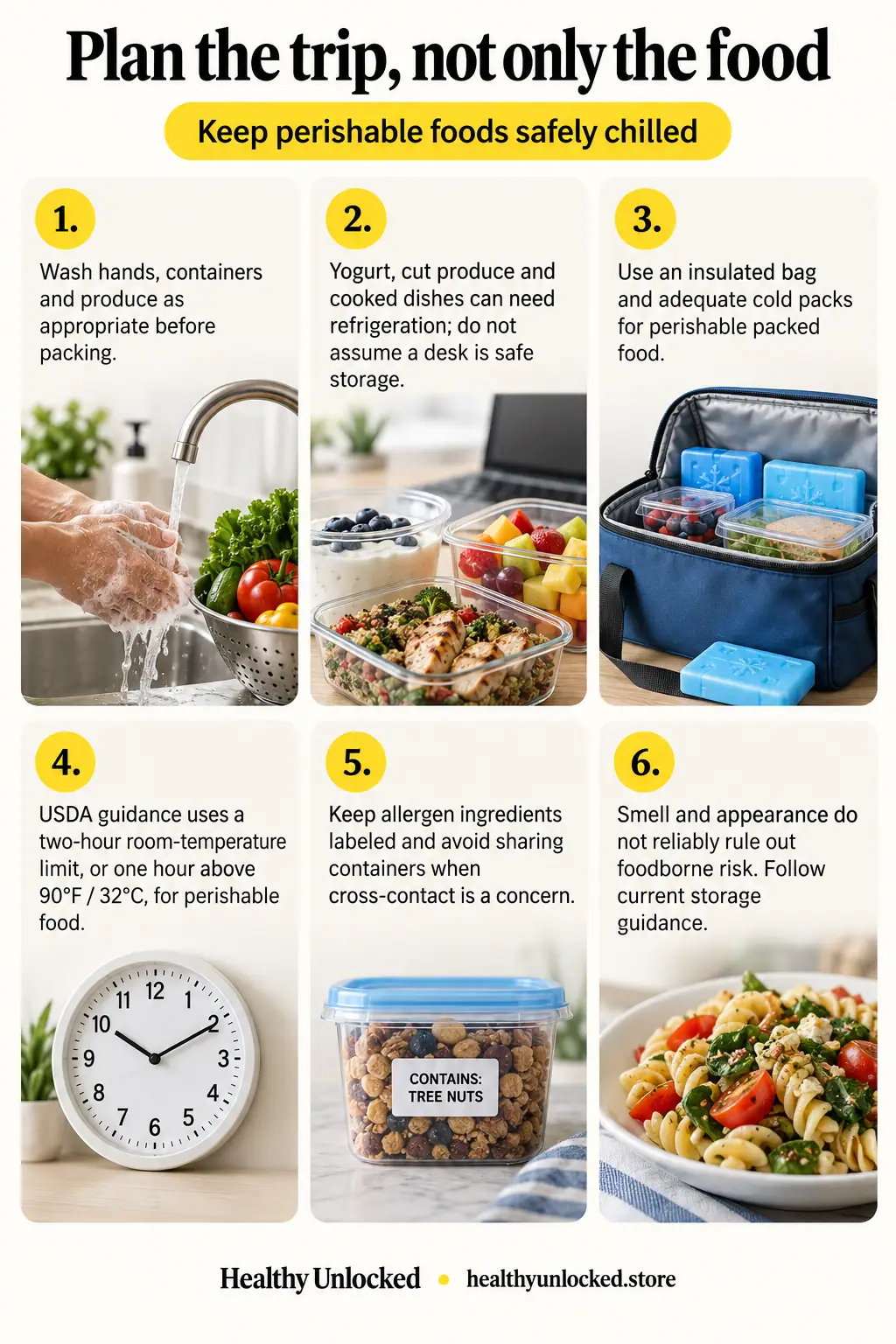
Wash hands and use clean containers. Prepare produce appropriately and keep raw ingredients from contaminating ready-to-eat food. Whole fruit, cut produce, yogurt and cooked dishes do not have identical storage needs. Read current guidance for the actual food instead of treating every snack container as shelf-stable.
For perishable packed food, use an insulated bag and adequate cold sources where needed. USDA guidance on keeping packed lunches safe discusses cold storage and packing. Arrange the workplace side as well: a reliable refrigerator or appropriate cold holding is more useful than leaving a chilled item on a desk all morning.
USDA guidance uses a two-hour limit at room temperature for perishable food, or one hour above 90°F, about 32°C. These are safety limits, not targets to use up deliberately. Time spent traveling and waiting matters together. Hot weather and a warm vehicle can make an apparently short journey less forgiving.
Smell and appearance do not reliably prove that a food is safe. If you are unsure about storage, follow suitable food-safety advice rather than tasting it as a test. A high fiber value does not protect a dish from foodborne risk. Choosing a different suitable option can be more practical than trying to rescue an unsafe plan.
Shared workplaces need allergy awareness
Keep allergen ingredients clear and respect workplace restrictions. A nut-free setting needs a suitable alternative, not an argument that nuts are nutritious. Cross-contact can matter through shared containers, utensils and preparation. Your preferred snack may be appropriate at home but unsuitable in a particular shared space.
The FDA information about food allergies is a useful starting reference. If you have a known allergy, follow your individual guidance. Do not use a generic snack list to test an ingredient that has caused a reaction.
Choose around budget, allergies and comfort
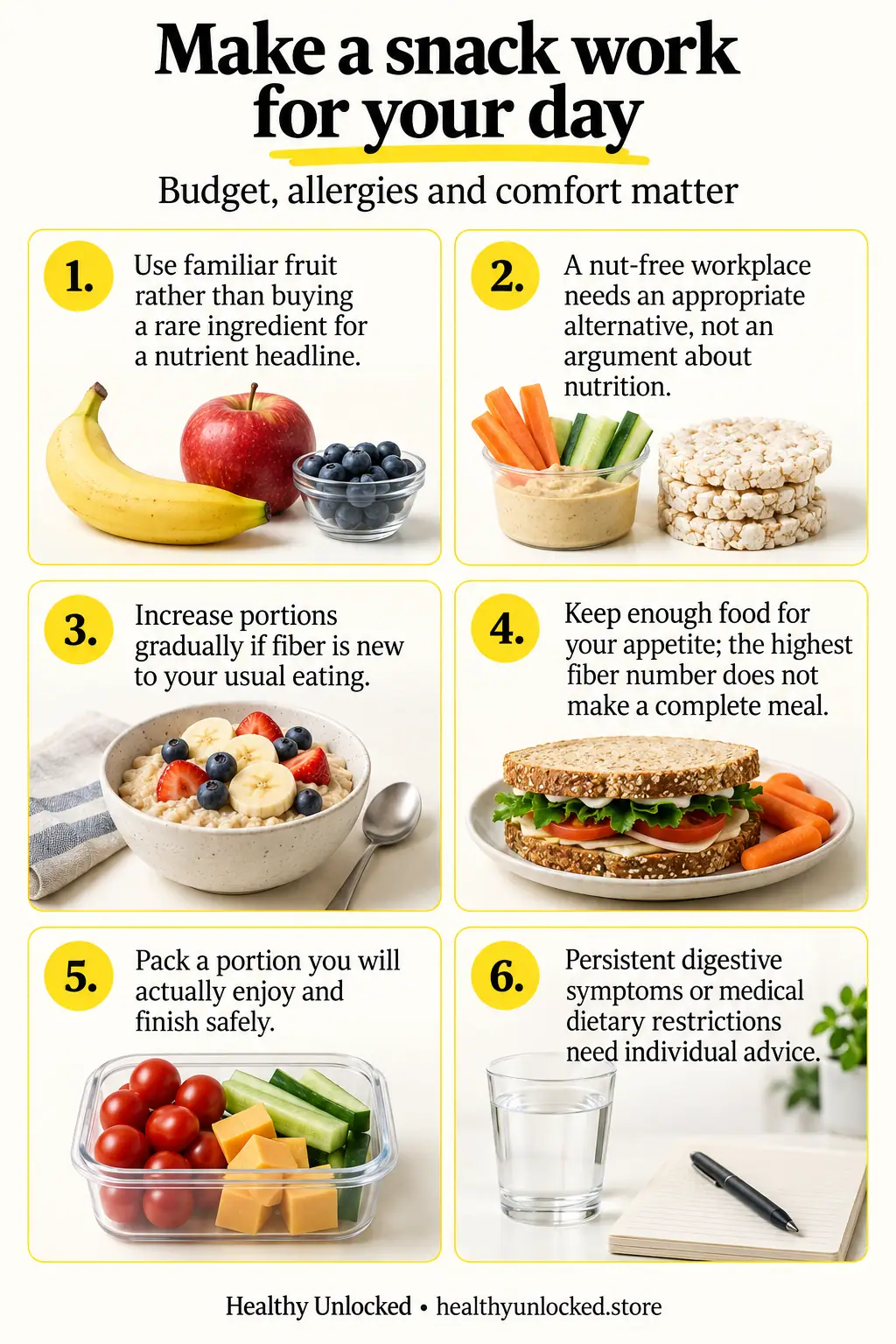
Choose around the budget and facilities you actually have. A familiar fruit can be more useful than an expensive ingredient bought because a search headline gave it a large number. Prices change with location, season and product. This guide does not claim a fixed cheapest option for every workplace.
If nuts do not suit you or the setting, consider an appropriate fruit, vegetable, whole-grain or legume choice. That substitution should still account for storage and your own restrictions. Do not copy a nutrient value from almonds onto a different ingredient just because it fills the same role in a container.
Increase fiber gradually when it is new to your usual eating. The NIDDK food and fiber guidance advises gradual changes and adequate fluids, with individual needs considered. A sudden large amount is not automatically a better strategy than a manageable addition.
Keep enough food for your appetite and circumstances. The snack with the largest fiber estimate may not be satisfying or sufficient on its own. A snack is not a complete meal simply because it has a favorable nutrient figure, and hunger is not evidence that you chose incorrectly.
Medical dietary restrictions and persistent digestive symptoms need individual advice. Some situations require a different approach from a general high-fiber list. Do not force a target, add a supplement or dismiss ongoing pain because an internet calculator gives a neat total.
Make a workday snack plan you can use
A practical plan starts with when and where you might eat. Choose a food that fits that break and the available storage. Keeping a suitable backup can help on a busy day, but it should be something you will actually enjoy and can keep appropriately.
Pack an amount deliberately rather than taking an entire bag because it is convenient. This is a planning choice, not a rule about eating less. You may need a larger or smaller amount on different days. Record the actual portion when you want to compare its fiber estimate, rather than assuming the same bag always represents the same serving.
Keep preparation simple. A whole fruit and a suitable packaged or home-prepared option may be enough. A mixed recipe can be enjoyable, but it does not become more valuable merely because it has many ingredients. Consider the time spent preparing, transporting and washing containers.
Review what actually worked at the end of a few days. Did the food stay safe, did you like it and was the timing useful? Perhaps a refrigerator was unavailable or a meeting moved the break. Adjust the plan around those facts rather than treating the interruption as a failure.
A drink break and a food break can be planned together without treating either as a rule. If tea or coffee timing affects your sleep, review the actual drink and schedule separately. Food fiber arithmetic does not calculate caffeine intake, sleep quality or the suitability of a drink for your personal circumstances.
Check the fiber estimate and download the worksheet
The calculator estimates fiber in one stated ingredient portion. Select a food record and enter the edible weight in grams. It multiplies the source’s fiber per 100 grams by your entered grams, then divides by 100. The displayed result is rounded to one decimal place after the calculation.
Worked example A: the apple-with-skin record gives 2.4 g fiber per 100 g. For a 150 g edible portion, 2.4 × 150 ÷ 100 = 3.6 g. The estimate describes that apple portion. It does not include a yogurt, nut topping or other food you eat with it.
Worked example B: the air-popped popcorn record gives 14.5 g per 100 g. For 20 g, 14.5 × 20 ÷ 100 = 2.9 g. It should not be presented as the measured fiber in a flavored commercial product. The product’s own label is more appropriate for that purpose.
The tool does not calculate calories, a daily fiber target or the nutrition of a complete meal. Inputs within its displayed limits are not recommended portions. Preparation and brand differences remain relevant even when the arithmetic is exact. The record and calculation make the estimate traceable, not individualized.
Blank, negative or unsupported inputs require correction. Zero grams represents zero food and therefore zero estimated fiber; it is not a suggested serving. The calculation needs no name or private medical information. Keep personal diet restrictions out of public comments and use suitable professional advice when needed.
| Example | Inputs and arithmetic | What the result means |
|---|---|---|
| First example | 2.4 × 150 ÷ 100 = 3.6 g | Raw apple with skin: historical source fiber per 100 g × edible grams ÷ 100. |
| Second example | 14.5 × 20 ÷ 100 = 2.9 g | Air-popped popcorn estimate; toppings and commercial products are not included. |
Calculate fiber in a stated portion
Choose the exact food and edible weight. This uses historical USDA estimates, not your recipe, roasted chana or a personal fiber goal.
Example: raw apple with skin, 2.4 g fiber per 100 g × 150 g ÷ 100 = 3.6 g fiber. A zero input produces zero, not a recommended portion.
Entries stay on this page. The tool does not save or transmit your health information.
Static method and a useful download
Without JavaScript, use the chart’s per-100-gram value and your edible weight: source fiber × grams ÷ 100. Keep the unrounded result until the final display. If you are calculating a mixture separately, all ingredients and their preparation need an appropriate basis; one ingredient’s figure is not the whole dish.
Download the snack portion and source worksheet for the source records, preparation states, comparison weights and unrounded calculations. The download also includes space for practical packing notes. It is a traceable estimate and planning aid, not a personalized nutrition prescription or new food-analysis dataset.
Common questions about high-fiber work snacks
These answers explain general choices and calculations. Allergies, medical restrictions and persistent symptoms can require advice beyond a snack list.
What are easy fiber snacks to take to work?
Whole fruit, appropriate nuts, whole-grain foods, vegetables and legumes can contribute fiber. Choose a realistic portion you enjoy and can store safely. The best practical option depends on allergies, workplace rules, refrigeration and the rest of your day.
Does yogurt provide fiber?
Plain dairy yogurt does not supply fiber. Fruit, oats or another appropriate plant ingredient can add it to the combination. Keep prepared yogurt snacks safely chilled, and do not treat one ingredient’s nutrient value as analysis of the whole bowl.
Can I use cooked chickpea values for dry roasted chana?
No. Preparation and water content differ. The chart uses a cooked, boiled, unsalted chickpea record for its stated edible portion. Use the actual product information or an appropriate matching record for dry roasted chana or a mixed recipe.
How do I calculate fiber in a smaller portion?
Multiply fiber per 100 grams by your edible portion in grams, then divide by 100. For example, 2.4 g per 100 g × 150 g ÷ 100 gives 3.6 g. Round after calculation and keep the preparation state clear.
Can perishable snacks stay on my desk all morning?
Do not assume that a desk provides safe storage. Perishable food can need cold holding during travel and at work. USDA guidance uses a two-hour room-temperature limit, or one hour above 90°F, about 32°C. Follow current advice for the actual food.
Should I suddenly eat a lot more fiber?
Build gradually if your usual intake is low, and consider fluids and individual needs. A larger number is not automatically a better choice. Persistent digestive symptoms or medical restrictions deserve appropriate advice rather than forcing a general target.
Your next snack: choose one familiar option, check its real portion and arrange safe storage. Add variety across your day without making every break a nutrient contest. A plan you enjoy and can use is more valuable than the largest figure in a chart.
About this article
By Yashveer Bharani for Healthy Unlocked. Food estimates use the linked USDA FoodData Central SR Legacy records with stated preparation and edible weights. Source values were checked on October 7, 2026; the underlying records remain historical estimates, not new laboratory tests.
The fictional label examples explain arithmetic. Photographs and pairings illustrate choices rather than document recipe testing. The calculator estimates one ingredient portion and does not prescribe a daily intake or analyze a complete mixed dish.
Sources and further reading
These original references support the guidance and its limits. A link does not mean that the institution reviewed or endorsed this article.
Main guidance
Practical reference
Context and definitions
Safety and care
Evidence and limitations
 Healthy Unlocked
Join the conversation
Share a practical idea or ask a question about this guide. Please keep personal medical details private.